
My Date with Cairo's Less Romantic Side
PROSE/POSTS
7/26/20257 min read
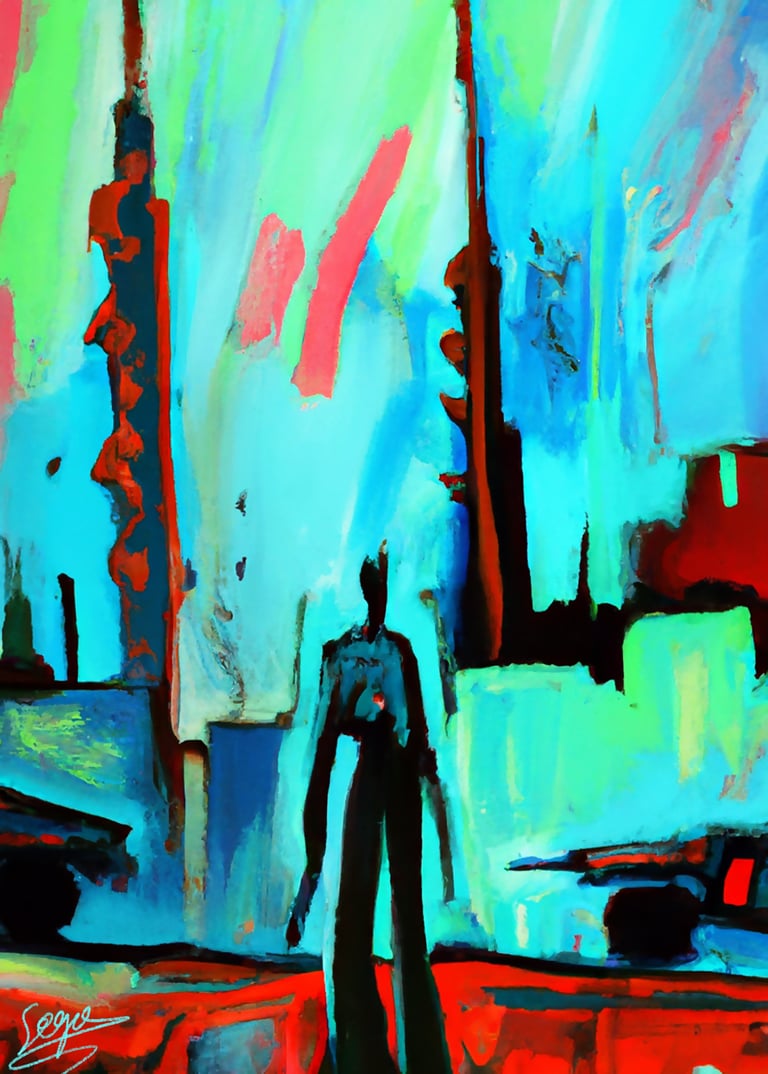
I. October 9, 2011, Maspero—opening scene
We were a knot of bodies outside the Maspero building (Maspero is the state TV building), chanting the old promise—Muslim and Christian are one hand—and for a hot second it felt true, like a chorus that could pry open a steel door. Then the steel doors rolled over us.
The first bullet didn’t ask for directions. It hissed past my ear like a mosquito with a jet engine, and the night around the Maspero building shuttered, air thick, the crowd folding and unfolding like an accordion with asthma. Then the armored personnel carriers (APCs) arrived, snorting like metal bulls that had been promised a massacre buffet. The street lights blinked, and then died; darkness spread like spilled ink, and the police began their clumsy ballet—spins with tires, grand waves over human legs. A soldier grinned the way boys grin when they find a hornet’s nest and a stick.
A boy brushed my arm, he is wearing a blue hoodie, tear tracks cutting clean lines through dust on his face. We tried to hold the line, our patchwork quilt of people tugged into a straight seam, and then the quilt was fed to the sewing machine from hell. Rifles barked punctuation. APCs wrote over us in block letters. I saw a shoe spinning alone in the road, defiant and ridiculous, as if it had resigned from its foot for moral reasons. Darkness should have helped us; instead, it dropped a curtain, so the violence could continue unseen.
Where there should have been dialogue, there was diesel breath and bullets. Where there should have been an apology, there was the crunch of boots and the flat grammar of rifle butts. My mouth filled with the taste of pennies and old monologues. Somewhere, someone kept chanting that we were one hand. Somewhere, someone’s hand let go.
When the sirens finally learned exhaustion, the street smelled like hot brakes, blood and bad intentions. My right wrist wore a bracelet of angry purple where a stranger’s hand had yanked me away from the steel front of an APC. The bruise would later look like Upper Egypt on a cheap map, Nile thin, edges smudged, history trying to form. We scattered into alleyways. Cairo swallowed us and pretended it had never met us.
We were there because a church in Aswan had been burned out, as if religion were a typo. We wanted ink, not erasure. Instead, we got a full stop, stamped with treads
Fade to black. Hold the note. Then—rewind.
II. The Year of Genre Switching
A year earlier, I pulled the social equivalent of swapping my SIM card mid‑call. I eased out of Islam and into a Coptic Protestant pew like a guy changing lanes without a signal—call it a genre switch: from the ancient epic to the indie cut with crunchy guitars and earnest altar calls.
It wasn’t overnight. More like a stubborn firmware update that freezes at 93% while your life spins. I kept moving anyway: volunteering until my knuckles looked sanded, hauling sacks of rice, translating bureaucrat into human, counting pills in clinics that smelled like bleach, sweat, and a distant onion. My hands learned the city’s Braille—rough concrete, the polite sting of bottled tear gas, a doorframe dent at wrist height where cops prefer to introduce you to wood.
And yeah, I had a plan. An actual five‑year roadmap: journalist → indie filmmaker → eccentric playwright who hosts weird dinner parties where strangers drink cheap wine and argue about metaphysics—because why adopt one existential crisis when you can curate a collection? I was writing plays, publishing essays, directing children’s theatre. A photo series even made it onto a wall at the Cairo Opera House. The dots were connecting. Applause doing what applause does.
Activism, meanwhile, gave me a résumé in hieroglyphs: flyers, marches, petitions, cuffs. The cuffs left parentheses around my wrists—two gray bruises that made every sentence I wrote look doubtful. The police van was a metal sauna with one soundtrack: the hiss of a man trying not to cry. In the precinct, the fluorescent tube had a whine. The cell had its own weather system—damp in the morning, damp at noon, philosophical at night.
You’d think short stays in custody would lose their sting after the first ride, like day‑old Koshary. that strange blend of rice, lentils, and pasta we Egyptians find oddly appealing. Nope. Every serving came with a fresh spice blend of bitterness: the guard who called me “Superman” like it was a diagnosis; the interrogator who smelled like cologne and old victories; my ribs collected a new boot‑shaped fingerprint; the question that circled back like a feral pigeon—Who organized it? Names. I offered silence wrapped in sarcasm, garnished with the politeness of a man declining a second helping of boots.
Sometimes it was three weeks straight: twenty‑one days of concrete, a blanket that exfoliated, sleep that arrived in coins not bills. I learned the shape of my breath on cold tile. I learned that hope, like bread, goes stale if you leave it on the sill.
And still we marched—because the governor in Aswan was a can of gasoline with a title; because a church had been erased; because the anthem said one hand, and I wanted to believe my fingers were attached to more than a fist.
III. Maspero Again (Play the Tape Forward)
Back to the street. Back to APCs doing Swan Lake in steel skirts. Back to the bureaucratic lie that people are paperwork.
When the lights died, the city’s other noises climbed out—river lap, someone shouting a prayer shaped like a curse, shoes scraping for cover. The armored beasts drew figure eights in the dark, signing their names in tire marks and panic. Above us, clever men whispered poison to the impressionable: repeat the right lies long enough and they hatch into orders.
The ideologues— Islamist radical right‑wing preachers of rage and grudges alone—had done their gardening well. They planted suspicion, watered it with TV, harvested obedient rage. The officers at the wheels didn’t look like monsters; they looked like men being paid overtime to kill. That’s the trick: turn people into job descriptions, bodies into obstacles, a crowd into a road block that needs to be removed.
When it ended, the street looked like a dropped tray. We were counted, then discounted. I kept my mouth shut in the van, let the metal seat vibrate my words loose before they reached my teeth.
Another six weeks—political hospitality. Same questions, upgraded sarcasm, downgraded sleep. My wrists sang their old duet with the cuffs. The cell smelled of iron and piss, a romance no candle company will bottle. The camera I wasn’t allowed to keep kept shooting in my head: a shoe with no foot, a banner with no pole, a chant still walking around the block trying to find its people.
And then—crack—the state snapped the pen mid‑sentence.
IV. Aftermath: The Long Quiet
Why? Because I believed criticizing authority was part of the job description. They filed it under treason—with punctuation. When your government decides your opinion is a threat, your views get consequences with keys and schedules. Cue prison. Cue silence. Cue forced transformation.
My speeches downgraded into involuntary, state‑sponsored retreats in facilities best described as minimalist dystopian chic. Years blurred. I lost years. A career. Friends. Meaning. Direction.
When they finally let me go, Cairo was still Cairo—horns nagging, sun bossing, Nile pretending to be patient—but the colors had faded a few shades, as if someone washed them with winter.
Here’s the address of the ruin, since vague won’t cut it: the pen went into a drawer with a dead battery and the last of my patience. The camera lens collected a polite film of disapproval. The notebook smelled faintly of pepper spray and metro dust. I stopped going to the soup kitchen on Tuesdays because the spoon felt heavier than the pot. I went to prayers again because conformity is lighter than memory. The old words fit like a borrowed shirt—wrong shoulders, everyone nodding anyway.
And so, as a moth is inevitably drawn back to a flame, I found myself slipping back into the comforting yet suppressive folds of Islam. Not due to a sudden spiritual enlightenment—oh no—but rather as a square peg whittled down to fit the monotonous round hole of societal norms. The journey from Islam to Christianity and back again was a frenzied dance on the knife’s edge of faith, a choreography that left me wobbling on the brink of an endless abyss of spiritual uncertainty. Thus was born the apatheist—detached from the religious hoopla and the rituals that trailed behind like confetti after a parade no one asked for.
To be clear: my anger isn’t at the neighbor who prays at dawn and brings extra cucumbers. It’s for the men with microphones who fatten on fear; the officials who weaponize paperwork; the drivers of steel who treat lives like potholes. If that sounds harsh, it’s because a tire once learned my name.
V. Cuffs, Koshary, and the Curtain Call
Sometimes I think I should start a cufflink business out of sheer irony, cast from molds shaped like the bracelets I kept collecting. Maybe engrave them with the old chant—one hand—so we remember what wrists are for.
I still own a mug that says “Radical Muslims are assholes”. Designed by a fanatic Christian, sold by an atheist with excellent margins—a holy trinity of commerce on my kitchen shelf. I drink tea from it at night and toast the absurdity: to armored ballet, to typos that are churches, to governors who splash, to lights that give up, to chants that refuse.
As for God—if there’s a bus coming, it’s late, and I’ve stopped checking the timetable. I stand at the stop anyway, because habits have gravity. The city moves around me: vendors offer sun‑tired fruit, a TV in a kiosk replays the news with the sound off, and a boy dribbles a dented ball that still, somehow, knows how to bounce.
If you’re waiting for redemption, I’ve got store credit. If you’re waiting for hope, I keep a little in my pocket like a breath mint—useful in emergencies, dissolves on the tongue.
I’m still here. Cairo is still a labyrinth with a sense of humor that borders on cruel. And somewhere inside me, under the dust, a chant I once believed in keeps tapping the glass.
Sega
Sei Pippi, nicht Annika
Explore creativity through words, art, and music.
© 2024. All rights reserved.